How to Make Cornhole Bags and When It’s Worth Buying Custom
A plain DIY guide to fabric, cutting, stitching, filling and closing cornhole bags, with honest notes on when custom printed bags make more sense for weddings, leagues, logos or larger events.
By Custom Cornhole Canada · · 5 min read
Plan the bag before you cut
If you want to know how to make cornhole bags, the short version is this: cut two 7 inch fabric squares, sew them with a strong seam, turn the bag right side out, fill it to about 16 oz, then close the opening securely. That gives you a finished bag close to the common 6 inch size used for cornhole. League rule books are still the final word if you are playing in a sanctioned event.
For backyard play, cottage weekends and casual rec nights, homemade bags can work well if you sew carefully and weigh each bag. The main choices are fabric, fill and stitching. Do not rush those parts. A bag that looks fine on the table can split after a few hard landings on a board, especially if the corners are weak or the fill is packed too tight.
- Plan for eight bags for a standard set: four in one colour and four in another.
- Cut sixteen fabric squares if you are making a full set of eight bags.
- Use a kitchen scale so every bag in the set feels consistent.
How to make cornhole bags: materials and tools
Duck cloth or cotton canvas is the usual choice for diy cornhole bags because it is tough, easy to sew and has enough texture to grip the board. Many home makers use heavy duck cloth rather than light quilting cotton. Thin fabric can stretch, tear at the seams or let fill work through the weave. Pre-washing cotton fabric can reduce later shrinkage, but it can also soften the finish, so test a scrap if feel matters to you.
For fill, plastic pellets are practical in Canada because they handle damp grass, cottage storage and changing weather better than dried corn. Dried corn is traditional, but it can attract pests and may not love moisture. You will also need strong polyester thread, pins or clips, fabric scissors or a rotary cutter, a ruler, a funnel or scoop, and a sewing machine with a heavier needle.
- Fabric: heavy duck cloth or canvas.
- Thread: strong polyester thread.
- Needle: denim or heavy-duty sewing needle.
- Fill: plastic pellets or another suitable bag fill.
- Measuring: ruler, square template and kitchen scale.
Cut 7 inch squares for a 6 inch finished bag
Most homemade guides start with 7 inch squares because the extra inch gives you a 1/2 inch seam allowance on each side. After sewing, the finished bag should be close to 6 inches square. Make a cardboard template if you are cutting more than one set. It keeps the corners square and helps every bag come out the same size. If your fabric has a visible direction, line up the design before cutting.
Cut two squares for each bag. Put the right sides of the fabric together, then pin or clip around the edges. Mark a small opening on one side, usually about 2 to 3 inches wide, so you can turn and fill the bag later. Keep the opening away from the corners if you can. Corners take a lot of impact, so it is better to leave the gap along a straight side.
- For one bag, cut two 7 inch squares.
- For eight bags, cut sixteen 7 inch squares.
- Keep your seam allowance consistent at about 1/2 inch.
- Do not put the fill opening right on a corner.
Sew, turn, fill and close the seam
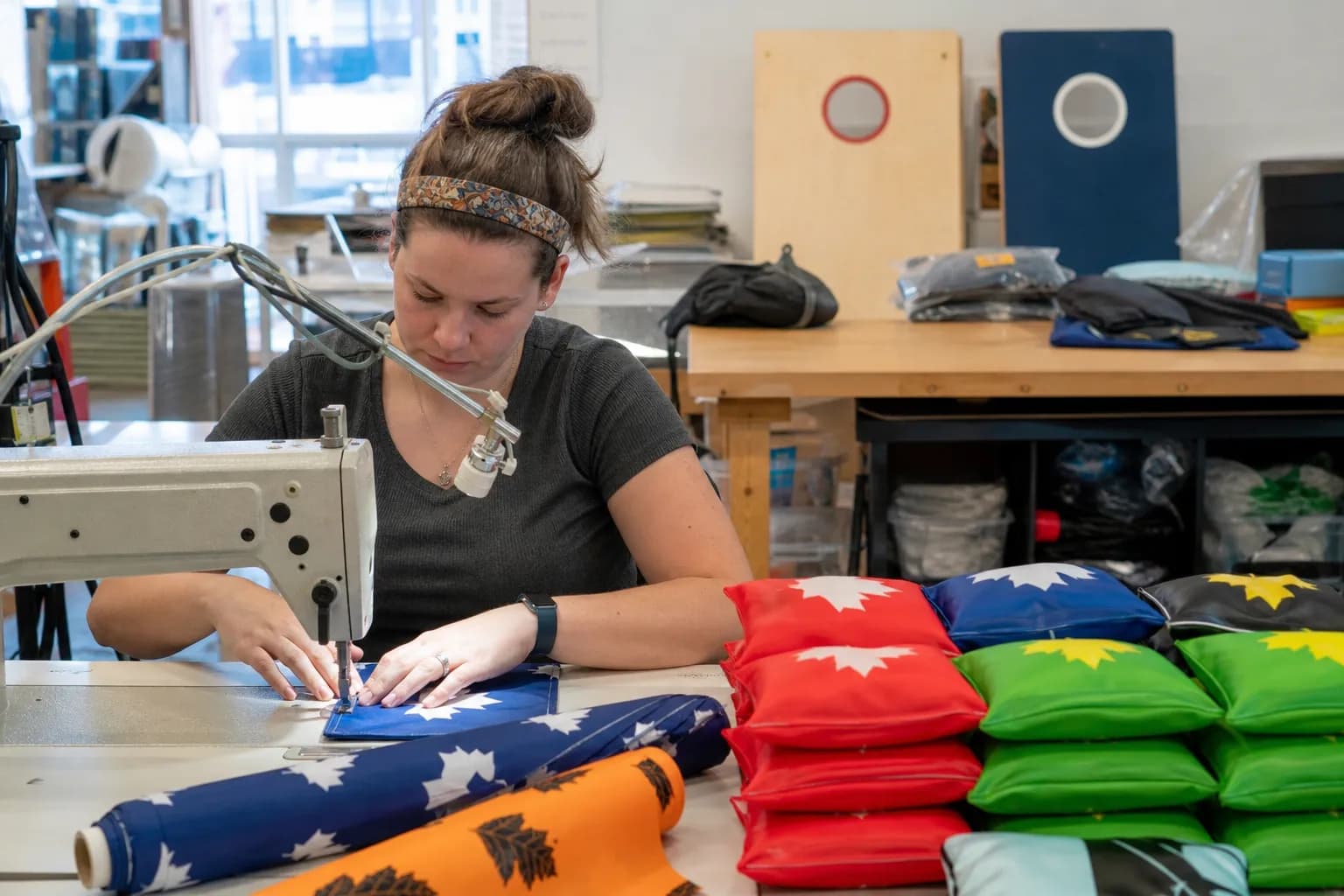
Sew around the square with a 1/2 inch seam allowance, leaving the marked opening unsewn. Backstitch at the start and end so the thread does not pull loose. For cornhole bags diy makers should use double stitching, not a single quick pass. Sew the full seam, then sew a second row just inside it or directly over it. This gives the bag a much better chance of surviving regular throws.
Trim the corner tips carefully without cutting the stitches, then turn the bag right side out. Push the corners out gently with a blunt tool. Weigh your fill, aiming for about 16 oz total per bag unless your league rules say otherwise. Pour the fill through a funnel, then fold the raw edges of the opening inward. Close the opening with two strong rows of stitching, making sure you catch both folded edges.
- Backstitch at stress points.
- Double stitch all four sides.
- Weigh each bag after filling.
- Close the final seam slowly and securely.
Check the feel before you make the whole set
Before sewing all eight bags, make one test bag and throw it a few times. It should feel full but not stiff. A bag that is overfilled will bounce more and may strain the seams. A bag that is underfilled can flop too much and feel uneven in the hand. If you are learning how to make bean bags for cornhole, this test bag saves fabric, fill and frustration.
Also check how the fabric slides on your boards. New duck cloth may feel grippy at first and relax with use. Store finished bags indoors or in a dry bin, especially at the cottage. Do not leave them sitting in wet grass, direct rain or a hot car for long stretches. Even tough homemade bags last longer when they are kept dry and clean between games.
- Throw the test bag from a normal distance.
- Check the corners after a few hard landings.
- Compare the weight against your other bags.
- Adjust fill before sewing the rest of the set.
When custom printed bags make more sense
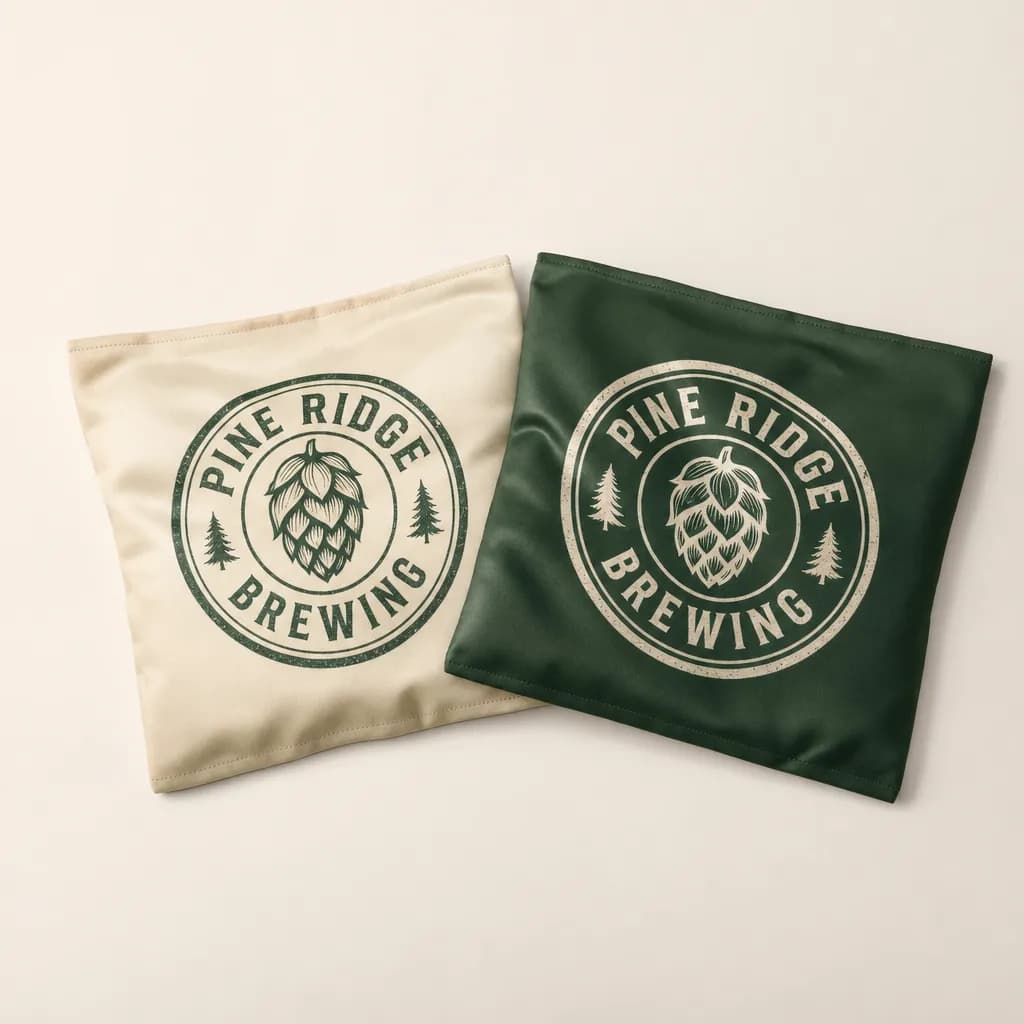
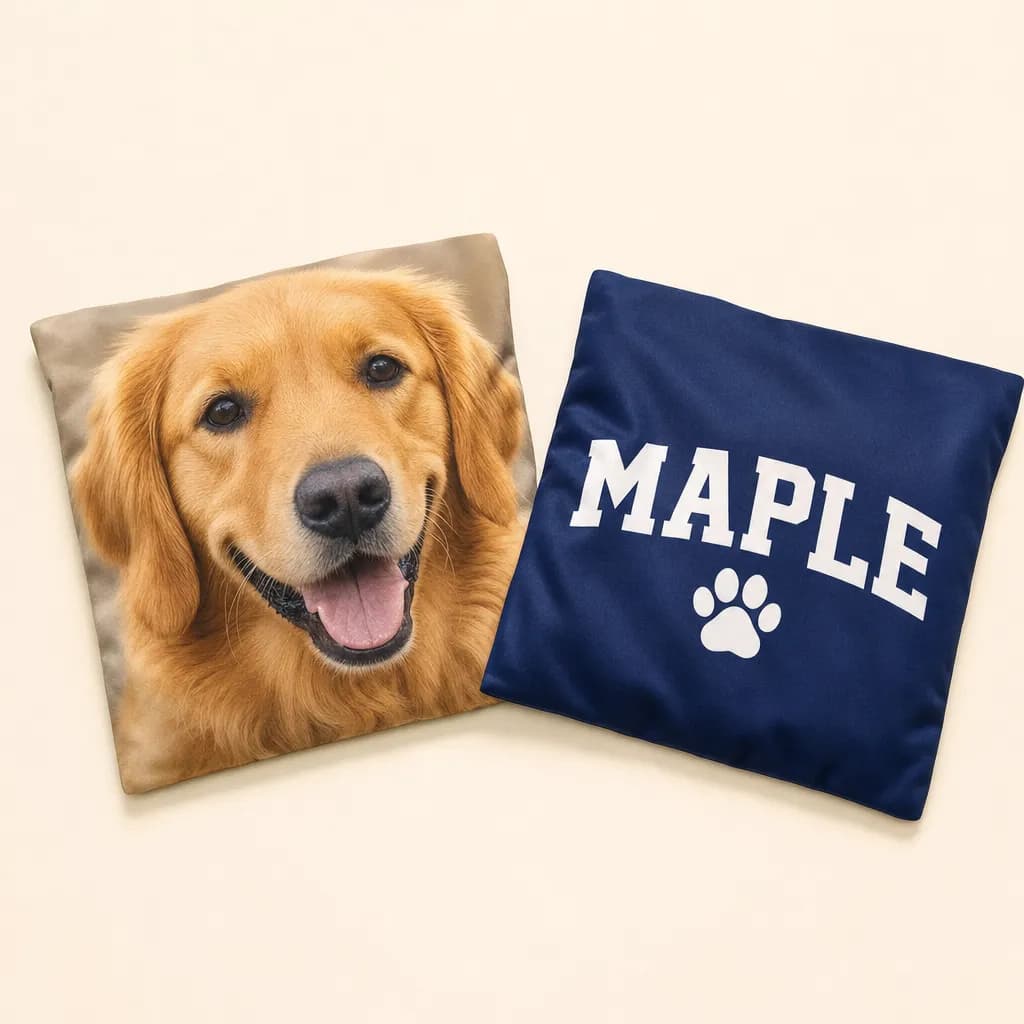
DIY is a good option when you enjoy sewing, need a simple backyard set, or want to use fabric you already have. Custom printed bags make more sense when the design matters. Logos, photos, names, monograms and detailed patterns are hard to do neatly at home. Fabric paint and iron-on designs can work for a small craft project, but they can also change the feel of the bag or wear unevenly.
Custom Cornhole Canada makes Custom Cornhole Bags with full dye-sublimation, so the ink goes into the fabric instead of sitting on top. That means logos, photos and colours do not crack, peel or rub off. If you are planning a wedding, see Custom Wedding Cornhole Bags. For company picnics, sponsor gifts or branded tournaments, Logo Cornhole Bags for Businesses are often the cleaner route.
Ordering custom bags in Canada
Custom bags are also practical when you need many sets with consistent artwork. Rec leagues, fundraisers, staff parties and community events can take a lot of sewing time if you make every bag yourself. A standard set is eight bags, four in each of two colours, and each colour can carry a different design. You can browse Team and League Cornhole Bags or Cornhole Bags for Parties and Events for ideas.
Custom Cornhole Canada is made in Canada at our shop in Mississauga, Ontario. There is no minimum order, so you can order one bag, one set of eight, or a few hundred for an event. Our designers build the artwork and send a proof for approval before anything is printed. It is about 4 weeks from proof approval to finished bags. Start with Start your design (free proof), where you can attach a logo or photo.
Questions
What fabric is best for homemade cornhole bags?
Heavy duck cloth or cotton canvas is usually the best choice for homemade cornhole bags. It is tougher than light craft cotton and stands up better to repeated throws. Look for a tight weave, sew with strong thread and test one bag before making the full set.
How much fill goes in a cornhole bag?
A common target is about 16 oz total per bag, but check the rule book for any league or tournament you play in. Use a kitchen scale rather than guessing by volume. The bag should feel full enough to hold shape but not so packed that it becomes hard or bouncy.
Can you make cornhole bags without a sewing machine?
Yes, but it is not ideal for regular play. You would need strong thread, a heavy needle and tight, even hand stitches, and it will take much longer. For a set that will be thrown often, borrowing or using a sewing machine is the better option.
How do you put a design on cornhole bags?
For homemade bags, you can try fabric paint, stencils or heat-transfer vinyl, but test first because surface designs can affect feel and may wear. For logos, photos, monograms or detailed artwork, custom printing is usually cleaner. Custom Cornhole Canada uses dye-sublimation, where the ink goes into the fabric so the design does not crack, peel or rub off.
More: Custom Cornhole Bags